Showing posts with label Vegetarian. Show all posts

5/5/14

Are butter, cheese and steak really bad for you?

The Questionable Link Between Saturated Fat and Heart Disease
Are butter, cheese and steak really bad for you?

By 

NINA TEICHOLZ

May 2, 2014

"Saturated fat does not cause heart disease"—or so concluded a big study published in March in the journal Annals of Internal Medicine. How could this be? The very cornerstone of dietary advice for generations has been that the saturated fats in butter, cheese and red meat should be avoided because they clog our arteries. For many diet-conscious Americans, it is simply second nature to opt for chicken over sirloin, canola oil over butter.

The new study's conclusion shouldn't surprise anyone familiar with modern nutritional science, however. The fact is, there has never been solid evidence for the idea that these fats cause disease. We only believe this to be the case because nutrition policy has been derailed over the past half-century by a mixture of personal ambition, bad science, politics and bias.

Our distrust of saturated fat can be traced back to the 1950s, to a man named Ancel Benjamin Keys, a scientist at the University of Minnesota. Dr. Keys was formidably persuasive and, through sheer force of will, rose to the top of the nutrition world—even gracing the cover of Time magazine—for relentlessly championing the idea that saturated fats raise cholesterol and, as a result, cause heart attacks.

This idea fell on receptive ears because, at the time, Americans faced a fast-growing epidemic. Heart disease, a rarity only three decades earlier, had quickly become the nation's No. 1 killer. Even President Dwight D. Eisenhower suffered a heart attack in 1955. Researchers were desperate for answers.

As the director of the largest nutrition study to date, Dr. Keys was in an excellent position to promote his idea. The "Seven Countries" study that he conducted on nearly 13,000 men in the U.S., Japan and Europe ostensibly demonstrated that heart disease wasn't the inevitable result of aging but could be linked to poor nutrition.

Critics have pointed out that Dr. Keys violated several basic scientific norms in his study. For one, he didn't choose countries randomly but instead selected only those likely to prove his beliefs, including Yugoslavia, Finland and Italy. Excluded were France, land of the famously healthy omelet eater, as well as other countries where people consumed a lot of fat yet didn't suffer from high rates of heart disease, such as Switzerland, Sweden and West Germany. The study's star subjects—upon whom much of our current understanding of the Mediterranean diet is based—were peasants from Crete, islanders who tilled their fields well into old age and who appeared to eat very little meat or cheese.

As it turns out, Dr. Keys visited Crete during an unrepresentative period of extreme hardship after World War II. Furthermore, he made the mistake of measuring the islanders' diet partly during Lent, when they were forgoing meat and cheese. Dr. Keys therefore undercounted their consumption of saturated fat. Also, due to problems with the surveys, he ended up relying on data from just a few dozen men—far from the representative sample of 655 that he had initially selected. These flaws weren't revealed until much later, in a 2002 paper by scientists investigating the work on Crete—but by then, the misimpression left by his erroneous data had become international dogma.

In 1961, Dr. Keys sealed saturated fat's fate by landing a position on the nutrition committee of the American Heart Association, whose dietary guidelines are considered the gold standard. Although the committee had originally been skeptical of his hypothesis, it issued, in that year, the country's first-ever guidelines targeting saturated fats. The U.S. Department of Agriculture followed in 1980.

Other studies ensued. A half-dozen large, important trials pitted a diet high in vegetable oil—usually corn or soybean, but not olive oil—against one with more animal fats. But these trials, mainly from the 1970s, also had serious methodological problems. Some didn't control for smoking, for instance, or allowed men to wander in and out of the research group over the course of the experiment. The results were unreliable at best.

The Saturday EssayThe World's Resources Aren't Running OutDante's Path to Paradise The New ABCs of Business The Unemployment Puzzle: Where Have All the Workers Gone? Rules for a Happy Life The Case for Nationalism The Future of Brain Implants Sheryl Sandberg and Anna Maria Chávez on 'Bossy,' the Other B-word 

But there was no turning back: Too much institutional energy and research money had already been spent trying to prove Dr. Keys's hypothesis. A bias in its favor had grown so strong that the idea just started to seem like common sense. As Harvard nutrition professor Mark Hegsted said in 1977, after successfully persuading the U.S. Senate to recommend Dr. Keys's diet for the entire nation, the question wasn't whether Americans should change their diets, butwhy not? Important benefits could be expected, he argued. And the risks? "None can be identified," he said.

In fact, even back then, other scientists were warning about the diet's potential unintended consequences. Today, we are dealing with the reality that these have come to pass.

One consequence is that in cutting back on fats, we are now eating a lot more carbohydrates—at least 25% more since the early 1970s. Consumption of saturated fat, meanwhile, has dropped by 11%, according to the best available government data. Translation: Instead of meat, eggs and cheese, we're eating more pasta, grains, fruit and starchy vegetables such as potatoes. Even seemingly healthy low-fat foods, such as yogurt, are stealth carb-delivery systems, since removing the fat often requires the addition of fillers to make up for lost texture—and these are usually carbohydrate-based.

The problem is that carbohydrates break down into glucose, which causes the body to release insulin—a hormone that is fantastically efficient at storing fat. Meanwhile, fructose, the main sugar in fruit, causes the liver to generate triglycerides and other lipids in the blood that are altogether bad news. Excessive carbohydrates lead not only to obesity but also, over time, to Type 2 diabetes and, very likely, heart disease.

The real surprise is that, according to the best science to date, people put themselves at higher risk for these conditions no matter what kind of carbohydrates they eat. Yes, even unrefined carbs. Too much whole-grain oatmeal for breakfast and whole-grain pasta for dinner, with fruit snacks in between, add up to a less healthy diet than one of eggs and bacon, followed by fish. The reality is that fat doesn't make you fat or diabetic. Scientific investigations going back to the 1950s suggest that actually, carbs do.

The second big unintended consequence of our shift away from animal fats is that we're now consuming more vegetable oils. Butter and lard had long been staples of the American pantry until Crisco, introduced in 1911, became the first vegetable-based fat to win wide acceptance in U.S. kitchens. Then came margarines made from vegetable oil and then just plain vegetable oil in bottles.

All of these got a boost from the American Heart Association—which Procter & Gamble, the maker of Crisco oil, coincidentally helped launch as a national organization. In 1948, P&G made the AHA the beneficiary of the popular "Walking Man" radio contest, which the company sponsored. The show raised $1.7 million for the group and transformed it (according to the AHA's official history) from a small, underfunded professional society into the powerhouse that it remains today.

After the AHA advised the public to eat less saturated fat and switch to vegetable oils for a "healthy heart" in 1961, Americans changed their diets. Now these oils represent 7% to 8% of all calories in our diet, up from nearly zero in 1900, the biggest increase in consumption of any type of food over the past century.

This shift seemed like a good idea at the time, but it brought many potential health problems in its wake. In those early clinical trials, people on diets high in vegetable oil were found to suffer higher rates not only of cancer but also of gallstones. And, strikingly, they were more likely to die from violent accidents and suicides. Alarmed by these findings, the National Institutes of Health convened researchers several times in the early 1980s to try to explain these "side effects," but they couldn't. (Experts now speculate that certain psychological problems might be related to changes in brain chemistry caused by diet, such as fatty-acid imbalances or the depletion of cholesterol.)

We've also known since the 1940s that when heated, vegetable oils create oxidation products that, in experiments on animals, lead to cirrhosis of the liver and early death. For these reasons, some midcentury chemists warned against the consumption of these oils, but their concerns were allayed by a chemical fix: Oils could be rendered more stable through a process called hydrogenation, which used a catalyst to turn them from oils into solids.

From the 1950s on, these hardened oils became the backbone of the entire food industry, used in cakes, cookies, chips, breads, frostings, fillings, and frozen and fried food. Unfortunately, hydrogenation also produced trans fats, which since the 1970s have been suspected of interfering with basic cellular functioning and were recently condemned by the Food and Drug Administration for their ability to raise our levels of "bad" LDL cholesterol.

Yet paradoxically, the drive to get rid of trans fats has led some restaurants and food manufacturers to return to using regular liquid oils—with the same long-standing oxidation problems. These dangers are especially acute in restaurant fryers, where the oils are heated to high temperatures over long periods.

The past decade of research on these oxidation products has produced a sizable body of evidence showing their dramatic inflammatory and oxidative effects, which implicates them in heart disease and other illnesses such as Alzheimer's. Other newly discovered potential toxins in vegetable oils, called monochloropropane diols and glycidol esters, are now causing concern among health authorities in Europe.

In short, the track record of vegetable oils is highly worrisome—and not remotely what Americans bargained for when they gave up butter and lard.

Cutting back on saturated fat has had especially harmful consequences for women, who, due to hormonal differences, contract heart disease later in life and in a way that is distinct from men. If anything, high total cholesterol levels in women over 50 were found early on to be associated with longer life. This counterintuitive result was first discovered by the famous Framingham study on heart-disease risk factors in 1971 and has since been confirmed by other research.

Since women under 50 rarely get heart disease, the implication is that women of all ages have been worrying about their cholesterol levels needlessly. Yet the Framingham study's findings on women were omitted from the study's conclusions. And less than a decade later, government health officials pushed their advice about fat and cholesterol on all Americans over age 2—based exclusively on data from middle-aged men.

Sticking to these guidelines has meant ignoring growing evidence that women on diets low in saturated fat actually increase their risk of having a heart attack. The "good" HDL cholesterol drops precipitously for women on this diet (it drops for men too, but less so). The sad irony is that women have been especially rigorous about ramping up on their fruits, vegetables and grains, but they now suffer from higher obesity rates than men, and their death rates from heart disease have reached parity.

Seeing the U.S. population grow sicker and fatter while adhering to official dietary guidelines has put nutrition authorities in an awkward position. Recently, the response of many researchers has been to blame "Big Food" for bombarding Americans with sugar-laden products. No doubt these are bad for us, but it is also fair to say that the food industry has simply been responding to the dietary guidelines issued by the AHA and USDA, which have encouraged high-carbohydrate diets and until quite recently said next to nothing about the need to limit sugar.

Indeed, up until 1999, the AHA was still advising Americans to reach for "soft drinks," and in 2001, the group was still recommending snacks of "gum-drops" and "hard candies made primarily with sugar" to avoid fatty foods.

Our half-century effort to cut back on the consumption of meat, eggs and whole-fat dairy has a tragic quality. More than a billion dollars have been spent trying to prove Ancel Keys's hypothesis, but evidence of its benefits has never been produced. It is time to put the saturated-fat hypothesis to bed and to move on to test other possible culprits for our nation's health woes.

Ms. Teicholz has been researching dietary fat and disease for nearly a decade. Her book, "The Big Fat Surprise: Why Butter, Meat and Cheese Belong in a Healthy Diet," will be published by Simon & Schuster on May 13.

4/2/14

Vegan/Paleo Update

I've been promising an update for several months regarding our conversion to a Paleo-ish diet two years ago from 31 years of vegetarianism, the last 25 of them as mostly raw, vegans.

Since my veganism ended as is reported by most long term vegans, with immune system failure - my wife and I both were hit with rheumatoid arthritis - you just wake up one day and you have it (!) - I have had trouble writing.

At first I couldn't type, write or hold on to anything.  So I had to hold a glass with both hands and really focus on it.  Life was pretty horrible.  Until my wife started having the same kind of symptoms, I had thought I had damaged a major nerve trimming trees, though there was no actual incident.

I have since also had exams that have shown no actual nerve damage, so that was pretty amazing to me, especially when it started to look like it was veganism that was the culprit.

So, I am sorry that I have not been able to write much and I am grateful to all the other people who have let me share their writing with you over the last few years when I could not write (or hardly think) myself.

One thing that has improved dramatically since we started our experiment - mostly following the guidelines from the Weston-Price Foundation was that our RA started getting better instead of worse - pretty much right away and now more slowly continues to improve.

Gratefully, I can type and write again.  I'm not quite as fast as I used to be, but my speed and accuracy gradually has been improving really a lot - so that makes me feel more up to the job of trying to have my fingers keep up with my thoughts again.

Also, I have been able to play guitar again.  As a singer-songwriter who generally has played guitar 3-6 hours daily for about 30 years, it was devastating to arrive here in the Detroit area where I had an agent who had been waiting 3 years to represent me here (and promised very steady work locally) to wake up one day and not be able to hold much less play a guitar.

I put all my guitars up for sale.  Of course, 4 years ago the economy was still in such free-fall that everyone was selling everything they owned and the demand for used music equipment was about zero. 
So that period was both painful and frustrating.  It's hard to let go of an instrument you love and have years of your life invested in and extra painful to then find nobody wants it.

Thankfully, a few months after we started our changeover, I found that I could play a little.  That was about  two and a half years after I had lost my ability.  I was really surprised.

I still couldn't make a fist so both my fingering and picking were very slow, deliberate and most often misplaced, but after a little over two years (I usually don't count that first transitional year where we were so emotionally traumatized by our new food that we did a lot of backsliding) I can play well enough to enjoy it a bit now and I make many fewer mistakes.

I really thought I would never play again, so I am very happy about this and I credit my natural diet completely.

I am considering the possibility that I might be able to record or even perform again - perhaps even within the next year!

Well, this was a short update.  That is probably the best kind for me right now.

I will be trying to write more myself here from now on and will include many more diet updates as well as my thoughts about religion and government.

I know everyone will be very interested in my report on what happens to poop when you make such a drastic dietary change - I'll be trying to get up the nerve to post that sometime.


7/5/13

Advance Notice - Vegan to Paleo Update

I was a devout vegetarian for over 30 years, the last 25 years as a very strict vegan, raw-foodist and sproutarian.  A knife, blender and grass juicer were all my kitchen required. (plus growing racks for wheat grass, and sprouts)
At about the same time (Fall of 2009) we both experienced autoimmune failure and became suddenly painfully crippled, generally partially paralyzed, struck with all kinds of health and performance issues that were mysterious, until we found that not only were our symptoms classic to high carb diets (vegan diets are basically about 100% carbs), but that many long term vegans had written about having the same experience, with very similar or exact symptoms, during about the same time frame (15 - 25 years as vegan) that were all a result of a high carb / low fat diet.
All those years we were also starving our brains by denying ourselves any saturated fats that are the primary nutrient for this critical organ.  Once sharp minds began to dull.
It is especially disturbing when you have been convinced you were on an almost magically superior - "in tune with god and nature" - diet!
We found however that a short glance at actual "nature" conclusively demonstrates that the concept of the "circle of life" that everyone seems to easily accept for every creature from microbes to planetary systems - excepting only humans - might also apply to us - even though that might infringe on one of the ways humans feel...um..."special" as in a special creation by God or Nature to both rank at the head of and yet be in some intrinsic way different from all the other creatures - not an animal, "a mere brute", but a superior being!
I digress....
We found that there was some real science that had been available but apparently never of interest to the diet "experts" we had consulted over the years.  (The Weston Price Foundation is a good place to start and two books I highly recommend are Why We Get Fat by Gary Taubes about the science of fats and carbs and The Vegetarian Myth, by Lierre Keith (who spent 20 years as a vegan) who discusses the specific diet caused health issues that long term vegans and many vegetarians seem to experience.
I will include a link at the end of this and each post about this topic for these and other books I recommend.
What we found caused us to turn our diet on it's head and essentially go paleo with a high fat / low carb plan.
The transition to eating meat took an entire years and was really touch and go.
We have now completed a little over one year since that time and have included organic, pastured foods (eggs, raw milk, cheese, yogurt, kefir, beef, pork, deer, chicken, turkey) and wild-caught north atlantic/pacific salmon and cod.
The changes have been pretty amazing and very gratifying.
That is what I am working on and since there is a continuing interest in this topic by readers of my blog [previous "Why I'm No Longer Vegan" post] I hope there will be interest in this update.
So, if you are one of those interested parties, it may be a few weeks yet for my update, but meanwhile - thank you, you're welcome, have a nice day.

My Must Read List

4/28/13

Does Meat Rot In Your Colon? Busting A Vegetarian Myth.

From J. Stanton
Gnolls.org
http://www.gnolls.org/1444/does-meat-rot-in-your-colon-no-what-does-beans-grains-and-vegetables/

Does Meat Rot In Your Colon? No. What Does? Beans, Grains, and Vegetables!

Caution: contains SCIENCE!
How many times have we all heard this bunk myth repeated?
“Humans can’t actually digest meat: it rots in the colon.” And its variant: “Meat takes 4-7 days to digest, because it has to rot in your stomach first.”
(Some variations on this myth claim it takes up to two months!)
Like most vegetarian propaganda, it’s not just false, it’s an inversion of truth. As the proverb says, “When you point your finger, your other three fingers point back at you.” Let’s take a short trip through the digestive system to see why!

A Trip Through The Human Digestive System (abridged)

Briefly, the function of digestion is to break food down as far as possible—hopefully into individual fats, amino acids (the building blocks of protein), and sugars (the building blocks of carbohydrates) which can be absorbed through the intestinal wall and used by our bodies.
Human Digestive System. Click for description
Click the picture for a more in-depth description, courtesy of the University of Cincinnati's biology department.
Here we go!
We crush food in the mouth, where amylase (an enzyme) breaks down some of the starches. In the stomach, pepsin (another enzyme) breaks down proteins, and strong hydrochloric acid (pH 1.5-3, average of 2…this is why it stings when you vomit) further dissolves everything. The resulting acidic slurry is called ‘chyme’—and right away we can see that the “meat rots in your stomach” theory is baloney. Nothing ‘rots’ in a vat of pH 2 hydrochloric acid and pepsin.
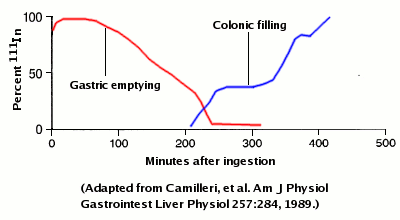
On average, a ‘mixed meal’ (including meat) takes 4-5 hours to completely leave the stomach—so we’ve busted yet another part of the myth. (Keep in mind that we have not absorbed any nutrients yet: we’re still breaking everything down.)
Gastrointestinal transit times: click for more information
Click the picture for more fascinating information on gastrointestinal transit times!
Eventually our pyloric valve opens, and our stomach releases the chyme, bit by bit, into our small intestine—where a collection of salts and enzymes goes to work. Bile emulsifies fats and helps neutralize stomach acid; lipase breaks down fats; trypsin and chymotrypsin break down proteins; and enzymes like amylase, maltase, sucrase, and (in the lactose-tolerant) lactase break down starches and some sugars. Meanwhile, the surface of the small intestine absorbs anything that our enzymes have broken down into sufficiently small components—usually individual amino acids, simple sugars, and free fatty acids.
Finally our ileocecal valve opens, and our small intestine releases what’s left into our large intestine—which is a giant bacterial colony, containing literally trillions of bacteria! And the reason we have a bacterial colony in our colon is because our own enzymes can’t break down everything we eat. So our gut bacteria go to work and digest some of the remainder, sometimes producing waste products that we can absorb. (And, often, a substantial quantity of farts.) The remaining indigestible plant matter (“fiber”), dead gut bacteria, and other waste emerge as feces.
It turns out that pepsin, trypsin, chymotrypsin, and our other proteases do a fine job of breaking down meat protein, and bile salts and lipase do a fine job of breaking down animal fat. In other words, meat is digested by enzymes produced by our own bodies. The primary reason we need our gut bacteria is to digest the sugars, starches, and fiber—found in grains, beans, and vegetables—that our digestive enzymes can’t break down.
Now what is that called, again, when food is being ‘digested’ by bacteria…?
rot \ˈrät\ (verb) — to undergo decomposition from the action of bacteria or fungi
In other words, meat doesn’t rot in your colon. GRAINS, BEANS, and VEGETABLES rot in your colon. And that is a fact.

…And That’s Why Beans Make You Fart

It’s easy to tell when your gut bacteria are doing the work, instead of your digestive enzymes: you fart. That is why beans and starches make you fart, but meat doesn’t: they’re rotting in your colon, and the products of bacterial decomposition include methane and carbon dioxide gases. Here’s a list of flatulence-causing foods, and here’s another:
A partial inventory: “Beans, lentils, dairy products, onions, garlic, scallions, leeks, turnips, rutabagas, radishes, sweet potatoes, potatoes, cashews, Jerusalem artichokes, oats, wheat, and yeast in breads. Cauliflower, broccoli, cabbage, Brussels sprouts and other cruciferous vegetables…”
One side benefit of a paleo diet is the elimination of the biggest, stinkiest fart producer—beans (due to the indigestible sugar raffinose)—and several smaller ones (wheat, oats, all grain products). And it sure seems like my gut bacteria have less to do now that my amylase and sucrase supplies aren’t being overwhelmed by an avalanche of starch and sugar.
But wait! There’s another punchline! Whenever we eat grains, beans, and vegetables, we’re not digesting and absorbing much of the plant matter…we’re actually absorbing bacterial waste products. Rephrased less diplomatically:
You’re not eating plants: you’re eating BACTERIA POOP.

Supporting Evidence: Where Things Rot

I know I really should have ended this article at the punchlines, but I’ve got more to say. Digestion is fascinating! (And before we go any farther, I am not arguing that we should never eat vegetables: I’m just busting a silly myth.)
First, I’ll footnote the essay above with these references.
J Appl Bacteriol. 1988 Jan;64(1):37-46. Contribution of the microflora to proteolysis in the human large intestine. Macfarlane GT, Allison C, Gibson SA, Cummings JH.
“In the stomach and the proximal small bowel, the microorganisms found as normal flora are a reflection of the oral flora. Bacterial concentrations in this region are 10(2)-10(5) cfu/ml intestinal content. In the colon, bacterial concentrations of 10(11)-10(12) cfu/g faeces are found.”
In other words, there are roughly 10 million times as many bacteria in the colon as in the small intestine. So bacterial digestion (‘rotting’) is not significant anywhere in our digestive tract but the colon.
Appl Environ Microbiol. 1989 Mar;55(3):679-83. Significance of microflora in proteolysis in the colon.Gibson SA, McFarlan C, Hay S, MacFarlane GT.
“Proteolytic activity was significantly greater than (P less than 0.001) in small intestinal effluent than in feces (319 +/- 45 and 11 +/- 6 mg of azocasein hydrolyzed per h per g, respectively).”
That’s a mere 3.4% of proteolytic activity occurring in the feces vs. the small intestine…and that doesn’t count what already occurred in the stomach. If meat were being digested in the colon, we would expect a far greater amount of proteolysis to occur there. And that 3.4% is likely due to dead intestinal bacteria (which make up a significant fraction of feces), not undigested meat.
Then, I’ll add this firsthand experience from an intestinal transplant survivor who spent months with a jejunostomy, watching the contents of his stomach drain directly into a bag.
“Can Humans Digest Meat?”
“Because I had such an extremely short bowel, my output was very high because no absorption had taken place. I was fed and hydrated by infusion and could literally live without eating or drinking at all. Because of my excessive output, we had to make a rig that had a hose extending from the ostomy bag that drained into a one gallon jug. Often the hose would get clogged and my wife or sister would have to use a coat hanger wire to unplug it. Now if vegan pseudoscience is right, we would suspect that the hose was being plugged by pieces of meat.
Never once did we see any solid chunks of meat. I became so curious about this that I once swallowed the largest chunk of meat I could possibly get down without choking. Because of the shortness of my bowel, it only took about twenty minutes for my stomach to empty into the ostomy. Better than two hours later, there were no signs of any meat chunks. What was always clogging the ostomy tube were pieces of vegetables that were not fully chewed.
Entire pieces of olive, lettuce, broccoli florets, grains and seeds were found. Yet, large pieces of fat were never witnessed. As a matter of fact, all the fat from the meat was already emulsified by the bile into solution. Over time, fat would coagulate on the side walls of the ostomy bag, but never were there any solid pieces observed.”
(Click for full article: Can Humans Digest Meat?)

Most Vegetation Doesn’t Even Rot In The Colon, Because Humans Aren’t Herbivores

Most of the edible part of a plant is cellulose, a polysaccharide (i.e. a very long chain of sugars) that is very difficult to break down. In fact, no digestive enzyme, in any animal, is capable of breaking down cellulose! So the only way that any animal can fully digest plants is for its gut bacteria to break down cellulose, and its intestines absorb the waste products.
Ruminant anatomy and physiology: click for details
Ruminant digestive system, courtesy of the University of Minnesota. Click for article.
Ruminants, including cattle, bison, deer, antelope, goats, and other red meat, have a special “extra stomach” called the rumen. They chew and swallow grass and leaves into the rumen, ferment it some, barf it back up again, chew it some more (called “chewing the cud”), and swallow it again, where it is digested a second time. Hindgut fermenters, like horses, have an extra-long gut. And rabbits run their food through twice: they eat their own poop in order to get more food value out of the plant matter they eat.
(For a better explanation of herbivore digestion, with lots of pictures, click here for an informative presentation (pdf) from the University of Alberta’s Department of Agriculture.)
Humans, in contrast, don’t have gut bacteria that can digest cellulose. That is why we can’t eat grass at all, why there is so little caloric value for us in vegetables, and why we call cellulose “insoluble fiber”: it comes straight out the back end.
This fact alone proves that humans, while omnivores, are primarily carnivorous: we have a limited ability to digest some plant matter (starches and disaccharides) in order to get through bad times, but we cannot extract meaningful amounts of energy from the cellulose that forms the majority of edible plant matter, as true herbivores can. We can only eat fruits, nuts, tubers, and seeds (which we call ‘grains’ and ‘beans’)—and seeds are only edible to us after laborious grinding, soaking, and cooking, because unlike the birds and rodents adapted to eat them, they’re poisonous to humans in their natural state.
You can demonstrate the purpose and limits of human digestion with a simple experiment: eat a steak with some whole corn kernels, and see what comes out the other end.

It won’t be the steak.
Live in freedom, live in beauty.
...
JS

2/14/13

11 Lies From Mainstream Nutritionists

As readers of this blog likely know, after 31 years of Vegetarianism, 25 of them as a strict Vegan and (70 - 100%) Raw Foodist, I came to consider those diets to be failed experiments.

Nearly 2 years ago, my wife and I started trying to include some raw, pastured, organic dairy (kefir, cheese, eggs) in our diet and after a few months tried to also introduce organic meats back into our diet.

This appeared doomed to fail as we were so emotionally opposed to meat eating, but we were persuaded by previously unavailable (to us) science that promoted a natural pre-agricultural diet, often called a Paleo-diet or LCHF (low carb, high fat).

After several starts and stops, we finally, about 9 months ago, succeeded in fully adopting this diet plan and have seen significant benefits, including some reversal of the immune deficiencies caused by our years of high carb, low fat eating.

Two books that I always recommend are Gary Taubes, Why We Get Fat, and Lierre Keith's, The Vegetarian Myth.  

Some good information can be gotten online via the Weston Price Foundation  and The Diet Doctor. 

People who are trying to recover their health after ruining it on a Vegan diet can also find help on Facebook at  Recovering Vegans & Vegetarians and Primal Body, Primal Mind. 

But I wanted to pass on a nice short introduction (or refresher) to some of these ideas in this nice post I received today, all points of which are elaborated in the references I have just given.

Top 11 Biggest Lies of Mainstream Nutrition

Woman Confused About What to EatThere is a lot of misinformation circling around in mainstream nutrition.
I have listed the worst examples in this article, but unfortunately this is just the tip of the iceberg.
Here are the top 11 biggest lies, myths and misconceptions of mainstream nutrition.

1. Eggs Are Unhealthy

There’s one thing that nutrition professionals have had remarkable success with… and that is demonizing incredibly healthy foods.
The worst example of that is eggs, which happen to contain a large amount of cholesterol and were therefore considered to increase the risk of heart disease.
But recently it has been proven that the cholesterol in the diet doesn’t really raise the cholesterol in blood. In fact, eggs primarily raise the “good” cholesterol and are NOT associated with increased risk of heart disease (1, 2).
What we’re left with is one of the most nutritious foods on the planet. They’re high in all sorts of nutrients along with unique antioxidants that protect our eyes (3).
To top it all of, despite being a “high fat” food, eating eggs for breakfast is proven to cause significant weight loss compared to bagels for breakfast (4, 5).
Bottom Line: Eggs do not cause heart disease and are among the most nutritious foods on the planet. Eggs for breakfast can help you lose weight.

2. Saturated Fat is Bad For You

Foods High in Saturated Fat
A few decades ago it was decided that the epidemic of heart disease was caused by eating too much fat, in particular saturated fat.
This was based on highly flawed studies and political decisions that have now been proven to be completely wrong.
A massive review article published in 2010 looked at 21 prospective epidemiological studies with a total of 347.747 subjects. Their results: absolutely no association between saturated fat and heart disease (6).
The idea that saturated fat raised the risk of heart disease was an unproven theory that somehow became conventional wisdom (7).
Eating saturated fat raises the amount of HDL (the “good”) cholesterol in the blood and changes the LDL from small, dense LDL (very bad) to Large LDL, which is benign (8, 9).
Meat, coconut oil, cheese, butter… there is absolutely no reason to fear these foods.
Bottom Line: Newer studies have proven that saturated fat does not cause heart disease. Natural foods that are high in saturated fat are good for you.

3. Everybody Should be Eating Grains

Bread
The idea that humans should be basing their diets on grains has never made sense to me.
The agricultural revolution happened fairly recently in human evolutionary history and our genes haven’t changed that much.
Grains are fairly low in nutrients compared to other real foods like vegetables. They are also rich in a substance called phytic acid which binds essential minerals in the intestine and prevents them from being absorbed (10).
The most common grain in the western diet, by far, is wheat… and wheat can cause a host of health problems, both minor and serious.
Modern wheat contains a large amount of a protein called gluten, but there is evidence that a significant portion of the population may be sensitive to it (11, 12, 13).
Eating gluten can damage the intestinal lining, cause pain, bloating, stool inconsistency and tiredness (14, 15). Gluten consumption has also been associated with schizophrenia and cerebellar ataxia, both serious disorders of the brain (16, 17).
Bottom Line: Grains are relatively low in nutrients compared to other real foods like vegetables. The gluten grains in particular may lead to a variety of health problems.

4. Eating a Lot of Protein is Bad For Your Bones and Kidneys

A high protein diet has been claimed to cause both osteoporosis and kidney disease.
It is true that eating protein increases calcium excretion from the bones in the short term, but the long term studies actually show the opposite effect.
High Protein Foods
In the long term, protein has a strong association with improved bone health and a lower risk of fracture (18, 19).
Additionally, studies don’t show any association of high protein with kidney disease in otherwise healthy people (20, 21).
In fact, two of the main risk factors for kidney failure are diabetes and high blood pressure. Eating a high protein diet improves both (22, 23).
If anything, a high protein diet should be protective against osteoporosis and kidney failure!
Bottom Line: Eating a high protein diet is associated with improved bone health and a lower risk of fracture. High protein also lowers blood pressure and improves diabetes symptoms, which should lower the risk of kidney failure.

5. Low-Fat Foods Are Good For You

Yogurt
Do you know what regular food tastes like when all the fat has been taken out of it?
Well, it tastes like cardboard. No one would want to eat it.
The food manufacturers know this and therefore they add other things to compensate for the lack of fat.
Usually these are sweeteners… sugar, high fructose corn syrup or artificial sweeteners like aspartame.
We’ll get to the sugar in a moment, but I’d like to point out that even though artificial sweeteners don’t have calories, the evidence does NOT suggest that they are better for you than sugar.
In fact, many observational studies show a consistent, highly significant association with various diseases like obesity, metabolic syndrome, diabetes, heart disease, premature delivery and depression (24, 25, 26).
In these low-fat products, healthy natural fats are being replaced with substances that are extremely harmful.
Bottom Line: Low-fat foods are usually highly processed products loaded with sugar, corn syrup or artificial sweeteners. They are extremely unhealthy.

6. You Should Eat Many Small Meals Throughout The Day

The idea that you should eat many small meals throughout the day in order to “keep metabolism high” is a persistent myth that doesn’t make any sense.
It is true that eating raises your metabolism slightly while you’re digesting the meal, but it’s the total amount of food that determines the energy used, NOT the number of meals.
Small Plate of Pasta
This has actually been put to the test and refuted multiple times. Controlled studies where one group eats many small meals and the other the same amount of food in fewer meals show that there is literally no difference between the two (27, 28).
In fact, one study in obese men revealed that eating 6 meals per day led to less feelings of fullness compared to 3 meals (29).
Not only is eating so often practically useless for most of the people out there, it may even be harmful.
It is not natural for the human body to be constantly in the fed state. In nature, we used to fast from time to time and we didn’t eat nearly as often as we do today.
When we don’t eat for a while, a cellular process called autophagy cleans waste products out of our cells (30). Fasting or not eating from time to time is good for you.
Several observational studies show a drastically increased risk of colon cancer (4th most common cause of cancer death), numbers going as high as a 90% increase for those who eat 4 meals per day compared to 2 (31, 32, 33).
Bottom Line: There is no evidence that eating many small meals throughout the day is better than fewer, bigger meals. Not eating from time to time is good for you. Increased meal frequency is associated with colon cancer.

7. Carbs Should Be Your Biggest Source of Calories

Food Pyramid
The mainstream view is that everyone should eat a low-fat diet, with carbs being around 50-60% of total calories.
This sort of diet contains a lot of grains and sugars, with very small amounts of fatty foods like meat and eggs.
This type of diet may work well for some people, especially those who are naturally lean.
But for those who are obese, have the metabolic syndrome or diabetes, this amount of carbohydrates is downright dangerous.
This has actually been studied extensively. A low-fat, high-carb diet has been compared to a low-carb, high-fat diet in multiple randomized controlled trials.
The results are consistently in favor of low-carb, high-fat diets (34, 35, 36).
Bottom Line: The low-fat, high-carb diet is a miserable failure and has been proven repeatedly to be vastly inferior to lower-carb, higher-fat diets.

8. High Omega-6 Seed and Vegetable Oils Are Good For You

Polyunsaturated Oil
Polyunsaturated fats are considered healthy because some studies show that they lower your risk of heart disease.
But there are many types of polyunsaturated fats and they are not all the same.
Most importantly, we have both Omega-3 fatty acids and Omega-6 fatty acids.
Omega-3s are anti-inflammatory and lower your risk of many diseases related to inflammation (37). Humans actually need to get Omega-6s and Omega-3s in a certain ratio. If the ratio is too high in favor of Omega-6, it can cause problems (38).
By far the biggest sources of Omega-6 in the modern diet are processed seed and vegetable oils like soybean, corn and sunflower oils.
Throughout evolution, humans never had access to such an abundance of Omega-6 fats. It is unnatural for the human body.
Research that specifically looks at Omega-6 fatty acids instead of polyunsaturated fats in general shows that they actually increase the risk of heart disease (39, 40).
Eat your Omega-3s and consider supplementing with cod fish liver oil, but avoid the industrial seed and vegetable oils.
Bottom Line: Humans need to get Omega-6 and Omega-3 fats in a certain ratio. Eating excess Omega-6 from seed oils raises your risk of disease.

9. Low Carb Diets Are Dangerous

Woman Standing On The Scale Frustrated
I personally believe low-carb diets to be a potential cure for many of the most common health problems in western nations.
The low-fat diet peddled all around the world is fairly useless against many of these diseases. It simply does not work.
However, low-carb diets (demonized by nutritionists and the media) have repeatedly been shown to lead to much better outcomes.
Every randomized controlled trial on low-carb diets shows that they:
  1. Reduce body fat more than calorie-restricted low-fat diets, even though the low-carb dieters are allowed to eat as much as they want (41, 42).
  2. Lower blood pressure significantly (43, 44).
  3. Lower blood sugar and improve symptoms of diabetes much more than low-fat diets (45, 46, 47, 48).
  4. Increase HDL (the good) cholesterol much more (49, 50).
  5. Lower triglycerides much more than low-fat diets (51, 52, 53).
  6. Change the pattern of LDL (bad) cholesterol from small, dense (very bad) to Large LDL, which is benign (54, 55).
  7. Low carb diets are also easier to stick to, probably because they don’t require you to restrict calories and be hungry all the time. More people in the low-carb groups make it to the end of the studies (56, 57).
Many of the health professionals that are supposed to have our best interest in mind have the audacity to claim that these diets are dangerous, then continue to peddle their failed low-fat dogma that is hurting more people than it helps.
Bottom Line: Low-carb diets are the healthiest, easiest and most effective way to lose weight and reverse metabolic disease. It is a scientific fact.

10. Sugar is Unhealthy Because it Contains “Empty” Calories

Junk Food
It is commonly believed that sugar is bad for you because it contains empty calories.
It’s true, sugar has a lot of calories with no essential nutrients. But that is just the tip of the iceberg.
Sugar, primarily because of its high fructose content, affects metabolism in a way that sets us up for rapid fat gain and metabolic disease.
Fructose gets metabolized by the liver and turned into fat which is secreted into the blood as VLDL particles. This leads to elevated triglycerides and cholesterol (58, 59).
It also causes resistance to the hormones insulin and leptin, which is a stepping stone towards obesity, metabolic syndrome and diabetes (60, 61).
This is just to name a few. Sugar causes a relentless biochemical drive for humans to eat more and get fat. It is probably the single worst ingredient in the standard western diet.
Bottom Line: The harmful effects of sugar go way beyond empty calories. Sugar wreaks havoc on our metabolism and sets us up for weight gain and many serious diseases.

11. High Fat Foods Will Make You Fat

Bacon
It seems kind of intuitive that eating fat would make you get fat.
The stuff that is gathering under our skin and making us look soft and puffy is fat. So… eating fat should give our bodies even more of it.
But it isn’t that simple. Despite fat having more calories per gram than carbohydrate or protein, high-fat diets do not make people fat.
As with anything, this depends on the context. A diet that is high in fat AND high in carbs will make you fat, but it’s NOT because of the fat.
In fact, diets that are high in fat (and low in carbs) cause much greater fat loss than diets that are low in fat (62, 63, 64).

1/19/13

The Giant American Food Rip Off! We All Pay For This!

We are all victims of one of the biggest scams in history.
Unbelievably, we usually don't even realize that we are being so used and abused by those we pay and trust to protect our best interests.
One thing that no one seems to consider - I just realized it myself with the recent failure of the farm bill to pass. 
For example, it was threatened that without the subsidies that you and I pay, milk was going to cost it's real, unsubsidized price of about $8/gal. instead of the artificial $1.50/gal.
Taxpayers pay these subsidies via various use taxes - so everyone pays; income tax only paying the interest on Federal debt.
Considering the higher cost and lower production of small/organic, non-subsidized farms, the $8.50/gal. for raw, organic milk seems like a deal!
 Of course when you compare the "food value" of one to the other, the Factory Foods are an obvious total rip off at any price.
Not only do we actually pay a higher price than we realize due to subsidies (that you and I actually pay), but those foods also make us customers for the drug, health and chemical industries that not only do we directly buy from - but would barely even need - if we ate "real" food.
 In addition to the cost and burden of poor health, lost productivity, vitality and quality of life, we also (you and me) pay subsidies to those other "big businesses" too! 
No wonder they are all making record breaking profits - they all have one hand in our pocket and the other around our throat!

5/29/12

Why I'm Not a Vegan Anymore

Every time Kita changes her blog name, all my links to her posts go dead.  So I am reposting this one on my blog - which never changes.  I don't know where the pictures went, but I will try to fix that.

Why I'm Not a Vegan Anymore

Grandma Kita's Story

My husband Doc and I were vegan for 25+ years, he was a vegetarian for about 7 years before I met him.

I became a vegetarian to battle ulcerative colitis and he became one to conform to the Mormon doctrine of the Word of Wisdom.  (D&C 89)

In the winter of 1984 we were in a violent auto accident with a drunk driver. Doc broke his back and I went into premature labor with our youngest daughter Jamie. For 6 months Doc sat in a recliner fitted with a back brace, as laying in a bed hurt too much. I was medicated and put on bed rest.

We recovered slowly and both of us gained a lot of weight, as we didn't know much about eating a healthy diet. I had only been a vegetarian for a year.

We were SAD (Standard American Diet) vegetarians. You know, pizza, sandwiches, spaghetti, chocolate pie, pancakes...

In 1985 our chiropractor suggested we'd try a raw food vegan diet to help us heal our injuries. This diet change help us recover very quickly, as we ate only organic fruit, nuts and vegetables along with a daily sprout salad. I went from my post pregnancy weight of 170# down to 90# in a matter of weeks.

It was miraculous!

However, our children were another story.  After only 6 months of this diet they stopped playing, they lost their usually happy vital energy. They had sallow dry skin and grew big bellies like the starving children in Africa.  I knew something was wrong, but the books we were studying reassured us this was normal at first and claimed after they had adjusted to eating this way they would gain weight and be healthier than ever.

Thankfully the people around us decided to talk to us about this situation and at the advice of a friend who was a nurse we gradually included some cooked foods. Our new diet consisted of whole grains, homemade breads and beans in addition to our organic produce and nuts.  We never fed our children a full on raw food vegan diet again.

Us adults were strictly vegan, with a fondness for the memories of the vitality we had experienced on our raw food vegan diet.  Every spring we'd returning to eating a raw food diet or close to it for the next 23 years.  However, in the fall we found that we couldn't stay warm eating only raw foods, so we'd reluctantly returned to cooking some of our diet.

Throwing away the stove was a regular spring event. I think I have given away at least a dozen stoves in the last 20 years.  My children would tease me that they knew it was spring when they would arrive home from school to find the stove sitting on the curb.

However, the health and vitality we had originally experienced as raw food vegans became nothing but a memory.

After about 3 years of becoming a vegan I became clinically depressed and had waking visions of throwing myself in front a cars and buses. This fear kept me home bound for over a year.

Tired of being unable to leave home by myself I sought counseling. My doctors treated this condition with antidepressants and assessed me as suffering from Obsessive Compulsive Disorder.

I also gained 20 lbs. past my healthy weight, I then weighted 140#. I looked 6 months pregnant. I hated how I looked and I hated how I felt.

At the same time Doc's thyroid failed and he suffered a mental break down which left him disabled.  He had been an extremely organized and proficient business executive and a talented musician/song writer.

None of the many mental health professionals he saw could figure out what was wrong with him.  None of the anti-depressants helped.  Not one of them inquired about his diet, nor did they suggest a full physical.

Seeing him sit wrapped in a blanket (even in the summer) staring at the wall was heart breaking.  He stopped playing guitar, lost his band and job as he couldn't even sign his name.

I'll let him tell you more about this bellow.

All I could think of during those 23+ vegan years was how much I wanted to die. I tried to commit suicide several times. Thankfully I would remember my children needed me and would seek help.

I was always gaining more weight no matter how little I ate or how much I exercised. I was angry all the time.  I couldn't think and my memory was terrible.  I couldn't sleep very well and spent every day dragging myself through life exhausted, insecure, living without joy.  I was an emotional wreck.

I also had sever hormone imbalances. My menses became irregular and I would experience false pregnancies.  I also suffered 4 miscarriages and lost a set of twin boys at 22 weeks gestation.

By my late 30's and through out my 40's on top of continuing depression and insomnia, I had I developed several autoimmune symptoms and my heart felt weak. I couldn't walk even a mile.

My blood pressure was high and I couldn't get any relief from natural means. As I was already on several antidepressants and didn't want to take more medications, I just lived with it.

Now that I look back on those days I can see that we weren't able to think clearly.  No matter how hard we worked at it we could not seem to keep our lives “together”.

I could tell that we weren't stupid people, both of us had high IQ scores to prove it, so why did we make so many mistakes?

We were always either being taken advantage of by unscrupulous people or we'd be unrealistic about our investments.  So, as well as having health issues we'd always be struggling with financial problems.

It confused me that the people around us, not eating our "superior vegan diet" were some how passing us by.  We couldn't seem to make the right choices or do as much as they could with their lives.  Why was our energy level always so much lower than theirs?

And, we spent upwards of $1000 a month on "good" foods to feed our family, but some how still had all the same illnesses and health struggles of people who lived on nothing but take-out.

Then in the fall of 2010 Doc suddenly, after trimming some small trees, became partially paralyzed from the neck down. Because he had been in two car accidents, one when he was 19 and the other with me and he had broken his neck and back, we thought this paralysis was the result of those injuries and his using the wrong tool to trim those trees.

So we reverted back to what we knew and tried to use raw food vegan diet and "super-foods" trying to heal this paralysis. After almost a year we had to concede that this approach failed.  He did not improve at all and my health was failing completely.

During this period my teeth started to hurt and my gums quickly receded a lot. They hurt all the time and I could barely eat. Returning to a cooked vegan diet improved the situation quite a bit, but left my tooth nerves still exposed.

In addition to having problems with my teeth my autoimmune problems seemed to get worse and I became even more chronically exhausted and depressed. I couldn't get enough sleep, I hurt all day everyday.

I felt like we were just sitting around waiting to die.

We eventually decided to try the medical route.

Doc's x-rays revealed the back injuries from those car accidents had healed! One of his chiropractors said he had the most perfectly aligned neck bones he had seen!  However he had developed arthritis down his neck and spine. This made no sense to us, we were sure our diet would have prevented arthritis!

Blood tests reveled his cholesterol levels were really horrible, which was even more confusing since he didn't eat any saturated fats.

Dissatisfied with the medical treatments Doc was receiving and their effects, I returned to my old ways of thinking.

I believe our bodies have the ability to heal themselves. So I kept searching for what we needed to do to heal ourselves.

I started thinking about how healthy my 85+ years old Aunts are. I started thinking I should eat like they do.  Perhaps like my grandparents did when they were children.

The healthiest of my aunts is 90+ and grows all of her own food. She eats home grown vegetables, a little meat, home raised eggs and has a goat she milks.  Her mind is sharper than mine and she doesn't need any medications.

I talked to Doc about this idea and his resistance coupled with my worn down health stopped me from doing anything about it.

Then my Mother in-law's health started to fail and Doc had to go live with her in another state. This left me with a lot of extra time and freedom.

So I turned to Google and found the Weston Price research. I double checked everything I read there and was impressed with the real science they use. I became convinced I was on the right track and started eating some free range eggs and raw fermented milk products.

To my surprise, my 23+ year struggle with depression went away in about 3 weeks.

Seeing my improvements and reading up on some of the research I had found, Doc decided he had nothing to lose and joined me in my experiment. His paralysis improved after a couple of months.

Then further research brought me to the GAP diet. This diet includes low starch veggies, navy beans and lentils. We had to give up veganism as this diet also includes cod liver oil and homemade meat broth.

We could be almost vegetarians, which was important to Doc. He was still very weary of actually eating meat as everything he knew stated that meat would cause cancer.

We both benefited from this low starch diet and his paralysis almost completely recovered and my teeth started feeling and looking healthier.

However, I was still struggled with autoimmune symptoms. I suffer from Lichen Sclerosus, Chronic Fatigue and Arthritis in my hands and feet.

This spring I felt drawn to do further research and began to study the Paleo or cave-man diet which includes veggies, grass-fed and free range meats, fermented raw dairy, free-range eggs, sprouted nuts and fruit in season. No grains. I highly recommend Primal Body - Primal Mind by Nora Gedgaudas

For the past few months we've eaten a Paleo style diet. We eat grass-fed organic meat or wild caught fatty fish everyday, along with plenty of organic vegetables. We also take a high quality natural vitamin and a tablespoon of cod liver oil and 2-3 tablespoons of coconut oil everyday.

I've lost 20# of body fat, mostly around my waist. My hands and feet hurt less, I sleep better, I no longer need to nap, my teeth are healing themselves. My autoimmune symptoms are lessening and for a few days a month seem to have gone away.  I've seen a big improvement in my ability to remember things and my reading comprehension has improved.

My husband feels much healthier and stopped going to his chiropractor 3 times a week.

Life has improved and we both feel hopeful for the first time in many-many years.

Grandpa weighs in -

I guess I feel obligated to add to this a bit. It's true that I spent 31 years as a vegetarian (the first six allowing dairy and refined sugar), 25 of them as vegan.

I am a real extremist and purist and while I never disparaged others for their eating habits, I was very strict about how my own family ate. With 5 generations of chiropractors in my family including early health food researchers and advocates I found myself to be the most extreme of them all.

I dropped out of 3 major chiropractic colleges to pursue energy only healing, which I have practiced since 1978, and considered myself a true disciple of what I considered a pure and superior diet. I discovered Spirulina 30 years ago and consumed and promoted it daily up to about a year ago when I finally isolated it as the source of recently acquired constipation. Now, of course I see that it took years of veganism to allow my body to degenerate to the point that it became a problem, because at first it made me feel great.

Also, when we first became vegans at the recommendation of our chiropractor (though he wasn't even vegetarian) we started with raw-food sproutarianism (Ann Wigmore) and followed that very strictly for 2 years, adding some cooked vegetables back into our diets when our six young children progressively got more lethargic and pasty-skinned. This was weird to us because the adults felt energetic and invigorated, and "the literature" (a disgustingly misleading book "Diet Into the 21st Century") told us that people would say we looked like skeletons and not to worry about it, which view our chiro endorsed.

Our children immediately recovered with the addition of some non-raw meals and for the next 23 years we struggled to stay between 50 and 80% raw.

Over the years, as we experienced occasional health issues (much worse than we recognized) we would dive back into 100% raw eating in an attempt to heal with what we thought was a more pure diet.

So two years ago, when I damaged my radial nerve by pruning with a reciprocal saw instead of a chain saw (or hand saw) we went back to a 100% raw diet to try to cure it. I experienced "pins and needles" over my entire body and couldn't control my tactile response, so I dropped everything I picked up, breaking expensive electronics and afraid to hold my grandkids. It was horrible.

While we loved our raw diet, we always found it a struggle to maintain (we stayed 100% for a year at this time) - but more importantly, it didn't help my problems.

I saw all kinds of doctors, deciding that since the chiropractor wasn't helping at all, I would go to (shudder) an MD, and so got MRIs and endured hours of painful poking with electric needles to determine what was wrong. They couldn't find anything, but I tried the physical therapy they prescribed and took all kinds of hard core drugs to manage my pain and escalating (level 4) hypertension. (my thyroid was already pretty much dead by then). None of that helped either.

Just over a year ago, I went to live with and care for my dying mother, bringing her on a 4 hour trip every other weekend to Michigan so she and I could visit my sister's and my families. I hadn't been gone more than a few weeks when Kita told that she was (in my absence) going to try eating some eggs and kefir.

I was so upset, especially when she told me that she had been secretly contemplating this change for about three years.

Between my debilitation and taking care of my mom with hers, I really had no energy to argue. I have always been committed to supporting Kita and respected her intellect (she is so smart) and just as when in the past she wanted to go on 30 day juice fasts (which I loved) I felt that I would have to support her in this, and since we generally are pretty much "connected at the hip", after she surprised me with a positive report on eating her first egg in 25 years, decided that I had better join her as long as she promised not to experiment with anything beyond dairy.

She was reading Weston Price who I had cursorily dismissed years earlier as a crackpot because he thought meat was good for you. I tried some kefir (full of sugar from Kroger) and liked it, just about the time my mom went into hospice (to die a week later) I bought some pastured eggs and started having an egg every day and a glass of kefir.

After about a month (and back home by now) I found that my manual dexterity was suddenly very much improved and while I hadn't been able to make a fist or play guitar for nearly two years, I could with great effort finger some chords and pick the right strings now and then.

I still couldn't ride my motorcycle since I couldn't control the handlebars and we were both sad to lose one of our favorite activities. (anybody want to buy a 76 Harley with a suicide shift?)

Over the months, with great effort my ability to play guitar continued to improve to the point that "other people" thought I sounded really good.

About 8 months ago Kita decided that she was going to try eating meat. My daughter Jamie chastised me for saying that if Kita ate meat I wouldn't kiss her. That made me think. (I really like the way she kisses) and I decided that if she was really going to do that, and was so convinced that it would improve our health (she had other health issues that our "pure" diet wouldn't resolve, but I'll let her tell about that) that I would try to drag myself to the table for vegetables cooked in meat broth.

The more she read (I was resistant to the literature, but trusted her conclusions) the more she moved us toward actually eating meat. I couldn't deny my dramatic (though not complete) improvement in health and though we were both creeped-out by eating meat, we kept at it and now, finally after all these months are starting to enjoy it.

Since we were vegan for so long (thank goodness all our kids secretly cheated and ate dairy) I expect it will be a slower recovery than some shorter term vegans have reported. We may have damaged our immune systems beyond full recovery - but maybe not.

Our decline was in gradual spurts and I didn't really realize until I was practically totally incapacitated how much vitality, strength and mental clarity I had lost (much like other vegans have reported - though I just recently found that out). Some little bit of that has improved and I hope it continues.

Now that we are eating organic, pastured meat and dairy only, we have even fewer restaurant options (really just vegan ones) than before, especially since we are opting out on grains, and still can't eat anything at family dinners but what we bring ourselves. (well, we've been doing that for nearly 30 years anyway) It's pretty confusing to relatives (as always) especially since they know we will eat meat and mayo, but not theirs.

Most importantly, however - we are getting well and now realize that our new paleo diet is our true NATURAL diet, being led previously by false religion that God was vegan and preferred us to be also (even though we seemed to be the only true believers in those teachings all those years, we were often accused at church of being satanists because we were vegetarian) which is how I became a vegetarian in the first place - to please God and eat like him. (D&C 89 - LDS Word of Wisdom purported to be dictated by Jesus)

I even nearly completed a book, likely now never to be published helping Mormons see that God and science demand vegetarianism!

I guess (hope) that eliminating veganism has been just the latest part of our long, painful, humiliating and divisive but successful extraction from Mormonism.

I don't have to hope regarding improvement in health by rejecting all of the above past beliefs - except to hope for more of what my return to Nature is already providing.

Other vegan bloggers who have had similar experiences.

My Must Read List